
Freezer Truck vs Reefer Truck vs Chiller Truck: How to Choose The Right Truck?
The UAE refrigerated transport market uses the terms “chiller truck,” “freezer truck,” and “reefer truck” constantly, and they are not interchangeable. Each term describes a different vehicle with a different temperature capability, a different refrigeration system, and a different operational purpose. Renting the wrong one wastes money, risks cargo damage, and can result in compliance failures.
This guide explains the precise difference between these three truck types as they are defined and used in the UAE market. If you have been searching for a chiller truck rental, a freezer truck rental, or a reefer truck rental, this comparison will help you choose the correct vehicle for your cargo, route, and budget.
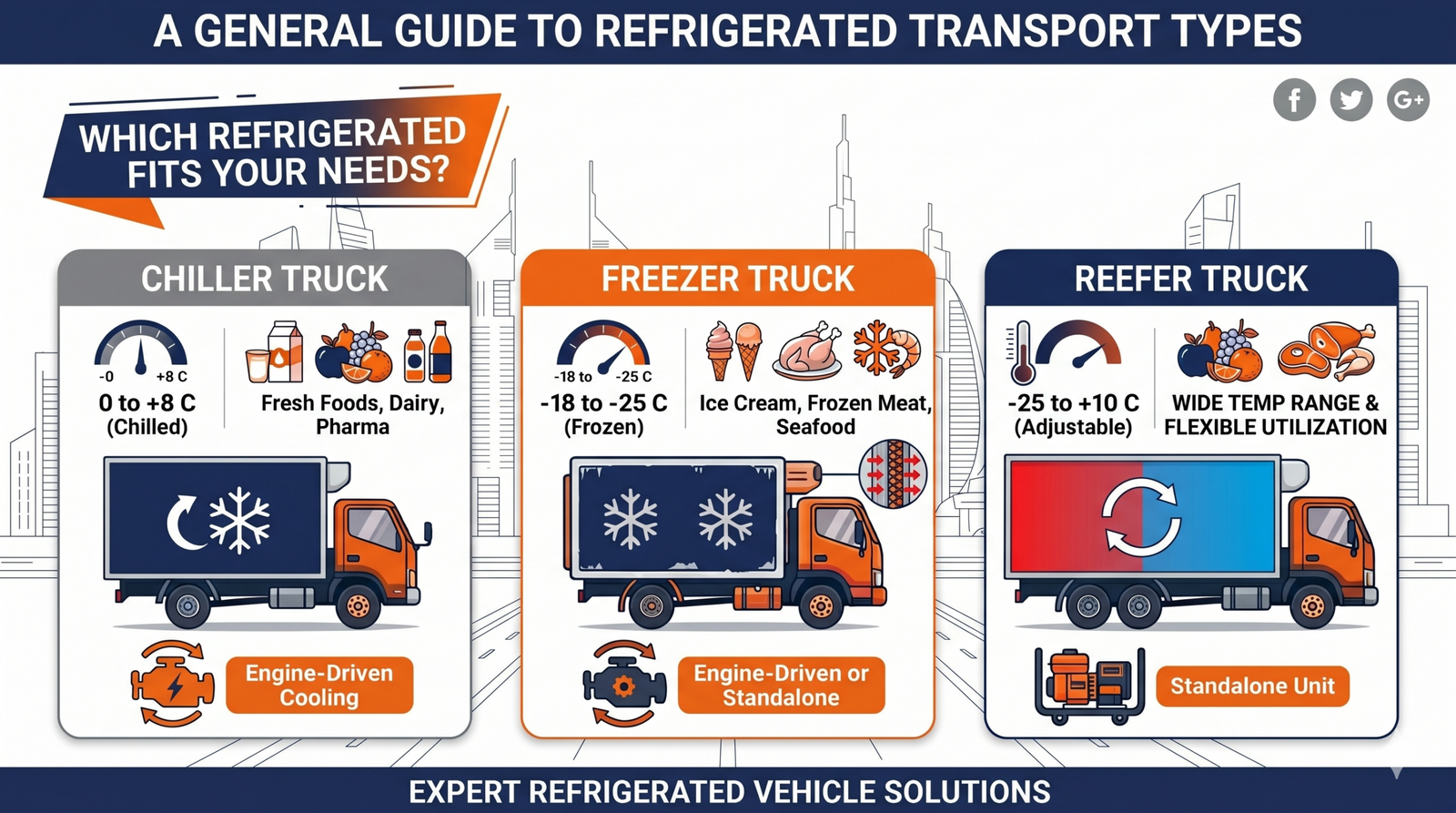
Quick Answer: A chiller truck maintains 0 to 8 degrees Celsius for fresh goods. A freezer truck maintains minus 18 to minus 25 degrees for frozen goods. A reefer truck has a standalone refrigeration unit that runs independently of the vehicle engine and can be set to any temperature from minus 25 to plus 10 degrees. The key difference is not just temperature but the refrigeration power source: chiller and freezer trucks are usually engine-driven, while reefer trucks always have standalone units.
What Is a Chiller Truck?
A chiller truck is a medium to large truck with an insulated cargo body and a refrigeration unit that maintains temperatures between 0 and 8 degrees Celsius. The “chiller” designation means the vehicle is built and calibrated for chilled (not frozen) cargo: fresh food, dairy products, beverages, pharmaceutical products, flowers, and other goods that must stay cold but must not freeze.
Chiller trucks in the UAE typically carry 3 to 7 tonnes of payload, which places them between smaller chiller vans (1 to 1.5 tonnes) and the largest reefer trucks (10 to 15 tonnes). They are the workhorse vehicle for wholesale food distribution, hotel supply, supermarket restocking, and pharmaceutical bulk delivery.
- Temperature: 0 to +8 degrees Celsius (chilled, not frozen)
- Payload: 3 to 7 tonnes
- Refrigeration: Engine-driven (most common) or standalone
- Best for: Wholesale fresh food, hotel bulk supply, supermarket delivery, pharmaceutical distribution
- Not suitable for: Frozen goods (ice cream, frozen meat, frozen seafood)
What Is a Freezer Truck?
A freezer truck is a medium to large truck with heavily insulated walls (typically 75mm or thicker) and a refrigeration unit capable of maintaining minus 18 to minus 25 degrees Celsius. The term “freezer” means the vehicle is specifically built for frozen cargo: ice cream, frozen meat, frozen seafood, frozen ready meals, and other products that must remain solid throughout transit.
The insulation on a freezer truck is thicker than on a chiller truck because the temperature differential between the cargo (minus 20) and the outside air (plus 45 in UAE summer) is much greater. This increased insulation adds weight to the vehicle body, which slightly reduces payload capacity compared to a chiller truck of the same size.
- Temperature: Minus 18 to minus 25 degrees Celsius (frozen)
- Payload: 3 to 10 tonnes
- Refrigeration: Engine-driven or standalone, more powerful compressor than chiller trucks
- Best for: Ice cream distribution, frozen meat, frozen seafood, frozen food wholesale
- Not suitable for: Fresh produce that could be damaged by freezing (lettuce, tomatoes, fresh herbs)
What Is a Reefer Truck?
A reefer truck is a large refrigerated truck whose defining feature is a standalone refrigeration unit with its own power source, separate from the vehicle engine. “Reefer” is short for “refrigerated.” The standalone unit means the refrigeration continues running even when the truck engine is switched off, which is essential for long port waits, customs delays, overnight parking, and extended warehouse loading sessions.
The other key advantage of a reefer truck is temperature flexibility. Unlike a chiller truck (fixed at 0 to 8) or a freezer truck (fixed below minus 18), a reefer truck’s standalone unit can be set to any temperature within its full range, typically minus 25 to plus 10 degrees Celsius. This means the same vehicle can haul frozen goods in the morning and chilled goods in the afternoon.
For a deeper look at reefer trucks specifically, see our dedicated guide: What Is a Reefer Truck?.
- Temperature: Minus 25 to plus 10 degrees Celsius (fully adjustable)
- Payload: 5 to 15 tonnes
- Refrigeration: Always standalone (own diesel engine or electric motor)
- Best for: Port-to-warehouse bulk transport, cross-emirate freight, flexible multi-cargo operations, overnight cold storage on wheels
- Not suitable for: City multi-stop last-mile delivery (too large for urban service lanes)
Master Comparison Table: Chiller Truck vs Freezer Truck vs Reefer Truck
| Factor | Chiller Truck | Freezer Truck | Reefer Truck |
| Temperature | 0 to +8 C | -18 to -25 C | -25 to +10 C (adjustable) |
| Payload | 3 to 7 tonnes | 3 to 10 tonnes | 5 to 15 tonnes |
| Refrigeration power | Engine-driven (usually) | Engine-driven or standalone | Always standalone |
| Engine-off cooling | No (unless standalone fitted) | Only if standalone | Yes (always) |
| Insulation thickness | 50mm standard | 75mm or thicker | 75mm or thicker |
| Typical route | City wholesale, hotel supply | Frozen wholesale, cold store to retail | Port to warehouse, cross-emirate |
| Common cargo | Fresh food, dairy, pharma, flowers | Ice cream, frozen meat, frozen fish | Mixed (adjustable per load) |
| UAE rental availability | High (most common truck type) | High | Moderate (specialist vehicle) |
How to Decide Which Truck You Need
The decision comes down to three questions:
Question 1: What temperature does your cargo need?
If your cargo must stay above zero (fresh food, dairy, pharma, flowers), you need a chiller truck. If it must stay below minus 18 (frozen meat, ice cream, frozen food), you need a freezer truck. If you carry different cargo types on different days or need flexibility within a single day, you need a reefer truck.
Question 2: Will the truck sit idle with the engine off for long periods?
If the truck will be parked at a port, warehouse, or event site for hours with the engine off, you need a standalone unit. That means a reefer truck, or a chiller/freezer truck specifically fitted with a standalone unit. If the truck runs continuously during its delivery window with the engine on, an engine-driven chiller or freezer truck is sufficient.
Question 3: How much payload do you carry per trip?
Under 1.5 tonnes: you do not need a truck at all. A chiller van or freezer van is the correct choice. 3 to 7 tonnes: chiller truck or freezer truck. 7 to 15 tonnes: reefer truck or large freezer truck.
For payloads under 1.5 tonnes and city delivery, see our guide to all refrigerated vehicle types in the UAE which includes vans, pickups, and smaller options.
Chiller Truck Rental and Freezer Truck Rental from Al Sahara
Al Sahara operates chiller trucks, freezer trucks, and reefer trucks across Dubai, Abu Dhabi, and Sharjah. All vehicles are fitted with Carrier Transicold or Thermo King refrigeration units, GPS tracking, and optional calibrated data loggers for pharmaceutical or audit-sensitive cargo.
Rental is available daily, weekly, and monthly with or without a trained driver. Same-day dispatch is available for pre-confirmed bookings. Contact our team to discuss which truck type matches your cargo, route, and schedule.
Frequently Asked Questions
What is the difference between a reefer and a van?
A reefer truck is a large vehicle (5 to 15 tonnes payload) with a standalone refrigeration unit that runs independently of the engine. A van (chiller van or freezer van) is a smaller vehicle (1 to 1.5 tonnes) with engine-driven refrigeration. Reefer trucks handle bulk and cross-emirate transport. Vans handle city last-mile multi-stop delivery.
Is a reefer a freezer?
Not exactly. A reefer truck can be set to any temperature from minus 25 to plus 10 degrees Celsius. A freezer truck is fixed below minus 18. A reefer can operate as a freezer, but it can also operate as a chiller. The term refers to the vehicle type and its standalone unit, not a fixed temperature setting.
What is a fridge truck called?
A fridge truck is called a refrigerated truck, reefer truck, chiller truck, or freezer truck depending on its temperature range and configuration. “Reefer” is the most common industry nickname. In the UAE rental market, always specify the temperature range you need rather than relying on vehicle names alone.
What is a box truck?
A box truck is a truck with a rectangular enclosed cargo body. When this box body is insulated and fitted with a refrigeration unit, it becomes a chiller truck, freezer truck, or reefer truck depending on the temperature capability. Not all box trucks are refrigerated, but all chiller trucks, freezer trucks, and reefer trucks use a box-style cargo body.
Which truck type is cheapest to rent?
Chiller trucks are generally the least expensive because they have thinner insulation and smaller refrigeration units than freezer trucks or reefer trucks. Reefer trucks with standalone units cost the most because of the independent power system and larger vehicle size. Exact pricing depends on rental duration, vehicle size, and whether a driver is included.
Can I use a chiller truck for frozen goods?
No. A chiller truck maintains 0 to 8 degrees Celsius and cannot reach sub-zero temperatures. Placing frozen goods in a chiller truck will cause them to thaw. For frozen cargo, you need a freezer truck (minus 18 to minus 25) or a reefer truck set to sub-zero.
Can I use a freezer truck for chilled goods?
Technically some freezer trucks can be set to higher temperatures, but this is not their design intent. The thicker insulation and more powerful compressor are optimised for sub-zero operation. Using a freezer truck for chilled goods is inefficient and more expensive than renting a chiller truck. For flexibility, a reefer truck with adjustable temperature is the better option.
How do I know if I need a truck or a van?
Payload is the deciding factor. If your cargo weighs under 1.5 tonnes per trip, you need a van. If it weighs 3 tonnes or more, you need a truck. Between 1.5 and 3 tonnes, the choice depends on cargo bulk versus weight and whether you need city manoeuvrability (van) or highway/industrial zone access (truck).
Need help choosing the right truck?
Contact Al Sahara at +971 52 373 7016, WhatsApp, or via our contact page. Our team will recommend the correct vehicle based on your cargo, temperature, route, and volume.

Abdul Basit
With over a decade of specialized experience in UAE's temperature-controlled logistics sector, I oversee critical cold-chain operations and compliance standards at Al Sahara. My expertise bridges the gap between stringent municipal HACCP regulations and practical, high-efficiency transport solutions for the F&B and pharmaceutical industries. I am deeply committed to sharing actionable insights on fleet management, GDP-compliant medical transport, and mitigating extreme-weather supply chain risks. Through these articles, I aim to equip local businesses with the knowledge needed to scale their operations securely and cost-effectively without compromising product integrity.