
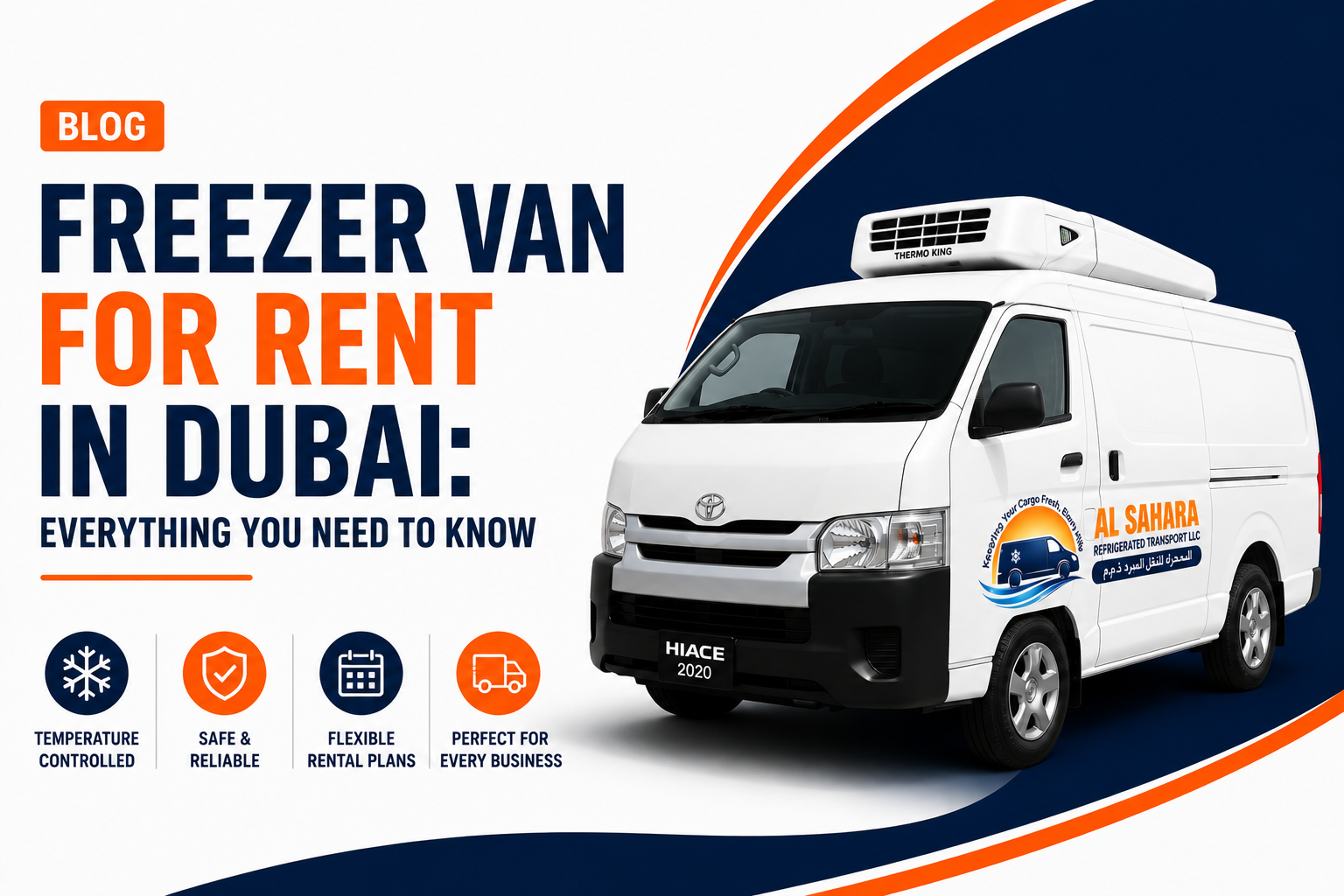
Freezer Van for Rent in Dubai: Everything You Need to Know
A freezer van is not the same thing as a chiller van. It operates at a completely different temperature range, uses different insulation, carries a more powerful refrigeration unit, and serves a different set of industries. If you need a freezer van for rent in Dubai, this guide covers what makes a freezer van different, what specifications to look for, which products require freezer transport, what areas are covered, and how to rent one from Al Sahara with same-day dispatch.
Quick Answer: A freezer van maintains cargo temperatures between minus 18 and minus 25 degrees Celsius for frozen goods including ice cream, frozen meat, frozen seafood, frozen ready meals, and frozen bakery products. It uses thicker insulation (75mm vs 50mm in chiller vans), a more powerful compressor, and R-404A refrigerant designed for sub-zero temperatures. Freezer vans carry 900 kg to 1,200 kg of frozen cargo. Al Sahara offers freezer van rental in Dubai on daily, weekly, and monthly terms with or without a trained driver.
What Makes a Freezer Van Different from a Chiller Van
The difference is not just a thermostat setting. A freezer van is engineered differently from a chiller van at multiple levels:
| Component | Chiller Van | Freezer Van |
| Temperature range | 0 to +8 degrees C | -18 to -25 degrees C |
| Insulation | 50mm Styrofoam | 75mm polyurethane or Styrofoam |
| Refrigerant | R-134a | R-404A |
| Compressor | Standard duty | Heavy duty, higher capacity |
| Payload | 1,000 to 1,500 kg | 900 to 1,200 kg (heavier body) |
| Door seals | Standard rubber gasket | Heavy-duty multi-layer seal |
| Floor | Standard insulated | Reinforced with anti-slip coating for ice/frost |
| Fuel consumption | Lower (smaller temp differential) | Higher (compressor works harder) |
| Rental cost | Lower | 15 to 25% higher than chiller |
The key engineering reason for these differences is the temperature differential. In UAE summer, a chiller van must maintain a cargo area temperature roughly 40 to 48 degrees below ambient (from +48 outside to +4 inside). A freezer van must maintain a differential of 65 to 73 degrees (from +48 outside to minus 20 inside). This much larger gap demands thicker insulation, a more powerful compressor, and a refrigerant that can operate efficiently at lower evaporation points.
For the full technical comparison, see our guide on chiller van vs freezer van vs freezer truck.
[IMAGE: Interior photo: Freezer van cargo area showing thick insulation panels, frost on walls, and reinforced flooring. Alt text: inside a freezer van for rent showing insulation and sub-zero temperature]
Products That Require Freezer Van Transport
Not everything that needs to stay cold requires a freezer van. Only products that must remain at minus 18 degrees or below need freezer transport. Using a freezer van for chilled goods (dairy, fresh meat, flowers) is unnecessarily expensive and can damage cargo through unwanted freezing.
Ice Cream and Gelato (minus 22 to minus 25 degrees)
Ice cream requires the coldest temperatures in commercial frozen food transport. Even a brief rise above minus 18 degrees causes partial thawing that destroys the texture. When refrozen, ice crystals form and the product becomes grainy and unsaleable. This is why ice cream distributors specify minus 22 to minus 25 degrees, two to seven degrees colder than the standard frozen food requirement.
Frozen Meat and Poultry (minus 18 degrees or below)
Commercially frozen meat and poultry must remain at minus 18 degrees or below during transport. Any rise above this temperature risks bacterial growth on the surface even if the core remains frozen. Dubai Municipality and ADAFSA inspectors check delivery temperature at the receiving dock, and loads arriving above minus 18 can be rejected and confiscated.
Frozen Seafood and Fish (minus 18 degrees or below)
Frozen fish and shellfish follow the same minus 18 degree requirement. Seafood is particularly vulnerable to temperature abuse because the high protein and moisture content support rapid bacterial growth if the cold chain is broken even briefly. Hamriyah Port seafood importers are among the highest-frequency freezer van users in the UAE.
Frozen Ready Meals and Frozen Bakery Products (minus 18 degrees)
Pre-packaged frozen meals, frozen pizza, frozen dough, and frozen pastry products all require minus 18 degrees during transit. These products are distributed from cold stores to supermarkets, grocery chains, and retail outlets across the UAE in daily freezer van runs.
Freezer Van Specifications
| Specification | Detail |
| Base Vehicle | Toyota Hiace LWB or equivalent |
| Temperature Range | Minus 18 to minus 25 degrees Celsius |
| Payload | 900 to 1,200 kg |
| Insulation | 75mm polyurethane or Styrofoam on all surfaces |
| Refrigerant | R-404A |
| Refrigeration Brand | Carrier Transicold or Thermo King |
| GPS Tracking | Standard on all Al Sahara vehicles |
| Temperature Monitoring | Digital cab display + optional calibrated data logger |
| Door Configuration | Rear barn doors with heavy-duty multi-layer seals |
| Floor | Insulated with anti-slip coating |
For comparison with the chiller van version of this vehicle, see our Hiace chiller van guide. For the Toyota Hiace freezer van as part of the full vehicle lineup, see our vehicle reference.
Areas Covered for Freezer Van Rental in Dubai
Al Sahara operates freezer vans across all commercial and industrial zones in Dubai with same-day dispatch:
- Industrial: Al Quoz, Jebel Ali, JAFZA, Dubai Investment Park (DIP), Dubai Industrial City, Dubai South, Dubai Logistics City
- Port and free zone: Jebel Ali Port, Dubai Airport Free Zone (DAFZA), Dubai Multi Commodities Centre (DMCC)
- Commercial: Deira, Bur Dubai, Business Bay, Downtown Dubai, Dubai Marina, JLT, JBR, Al Barsha, Jumeirah
- Residential and retail: Mirdif, Al Nahda, International City, Dubai Silicon Oasis, JVC, Sports City
We also cover Abu Dhabi (Musaffah, KIZAD, ICAD, Khalifa City) and Sharjah (SAIF Zone, Industrial Areas, Hamriyah Free Zone) for cross-emirate freezer van deliveries.
How to Rent a Freezer Van in Dubai
The process is the same as renting a chiller van but with one additional specification: you must confirm the exact sub-zero temperature your cargo requires. The standard setting is minus 18 degrees, but ice cream distributors typically request minus 22 to minus 25 degrees.
- Step 1: Contact Al Sahara with your cargo type, required temperature, pickup location, delivery destinations, and rental duration
- Step 2: Receive a detailed quote within 30 minutes covering vehicle type, driver option, and all-inclusive pricing
- Step 3: Confirm booking. The freezer van is pre-cooled to your specified sub-zero temperature before dispatch
- Step 4: Vehicle arrives at your location ready for loading. Temperature log started before arrival
Daily, weekly, and monthly rental is available. Long-term contracts of 3 months or more are available at reduced rates through our fleet leasing programme.
Freezer Van vs Freezer Truck: When to Upgrade
If your frozen cargo exceeds 1.2 tonnes per trip, or your route is cross-emirate rather than city-based, you need a freezer truck instead of a freezer van. Here is the decision framework:
- Under 1.2 tonnes, city delivery: Freezer van
- 1.2 to 3 tonnes, city or cross-emirate: Small freezer truck
- 3 to 10 tonnes, wholesale or cross-emirate: Freezer truck
- Above 10 tonnes or port-to-warehouse: Reefer truck with standalone unit
For the full comparison of all truck types, see our guide on freezer truck vs reefer truck vs chiller truck.
Frequently Asked Questions
How does a freezer van work?
A freezer van uses the same vapour-compression refrigeration cycle as a chiller van but with a more powerful compressor, thicker insulation (75mm), and R-404A refrigerant that can reach minus 25 degrees. The system continuously removes heat from the cargo area to maintain sub-zero temperatures. For the full technical explanation, see our guide on how chiller van refrigeration works.
What temperature does a freezer van maintain?
A standard freezer van maintains minus 18 to minus 25 degrees Celsius. The exact temperature is set before dispatch based on your cargo requirements. Ice cream requires minus 22 to minus 25. Frozen meat and seafood require minus 18 or below.
How long does a refrigerated van last?
The base vehicle (Toyota Hiace or equivalent) typically has a working life of 8 to 10 years with proper maintenance. The refrigeration unit requires servicing every 3 to 6 months and may need a compressor replacement after 4 to 6 years of heavy use in UAE conditions. The insulation gradually degrades over time, reducing cooling efficiency. When renting, the provider handles all maintenance and replaces units as needed.
Can I rent a freezer van for one day?
Yes. Al Sahara offers daily freezer van rental with same-day dispatch across Dubai, Abu Dhabi, and Sharjah. Daily hire is suitable for event catering, one-off frozen deliveries, seasonal demand, and businesses testing frozen logistics routes.
Is a freezer van more expensive than a chiller van?
Yes. Freezer vans cost approximately 15 to 25 percent more to rent than chiller vans of the same size due to the heavier insulation, more powerful refrigeration unit, and higher fuel consumption.
Do you provide a driver with the freezer van?
Yes. You can rent with or without a driver. Al Sahara’s drivers are trained in frozen goods handling, temperature monitoring, and route management across all UAE industrial zones and delivery corridors.
What areas in Dubai do you cover?
All commercial, industrial, and residential areas in Dubai including Al Quoz, Jebel Ali, JAFZA, DIP, Deira, Business Bay, Dubai Marina, Mirdif, and all other districts. We also cover Abu Dhabi and Sharjah for cross-emirate deliveries.
Can I rent a small freezer van?
Yes. Al Sahara stocks small freezer vans (Toyota Hiace class) with payloads of 900 to 1,200 kg, ideal for city last-mile delivery of frozen goods. For larger loads, freezer trucks are available.
Need a freezer van in Dubai?
Contact Al Sahara at +971 52 373 7016, WhatsApp, or via our contact page. Same-day dispatch. Minus 18 to minus 25 degrees. Daily, weekly, or monthly. With or without driver.

Abdul Basit
With over a decade of specialized experience in UAE's temperature-controlled logistics sector, I oversee critical cold-chain operations and compliance standards at Al Sahara. My expertise bridges the gap between stringent municipal HACCP regulations and practical, high-efficiency transport solutions for the F&B and pharmaceutical industries. I am deeply committed to sharing actionable insights on fleet management, GDP-compliant medical transport, and mitigating extreme-weather supply chain risks. Through these articles, I aim to equip local businesses with the knowledge needed to scale their operations securely and cost-effectively without compromising product integrity.